
The short answer
ClearSky installs central AC and heat pump cooling in Campbell homes, starting with a room-by-room load calculation and a close look at existing ducts. We explain equipment options, Air District rules that affect future furnace choices, and how to check current local incentives before you commit.
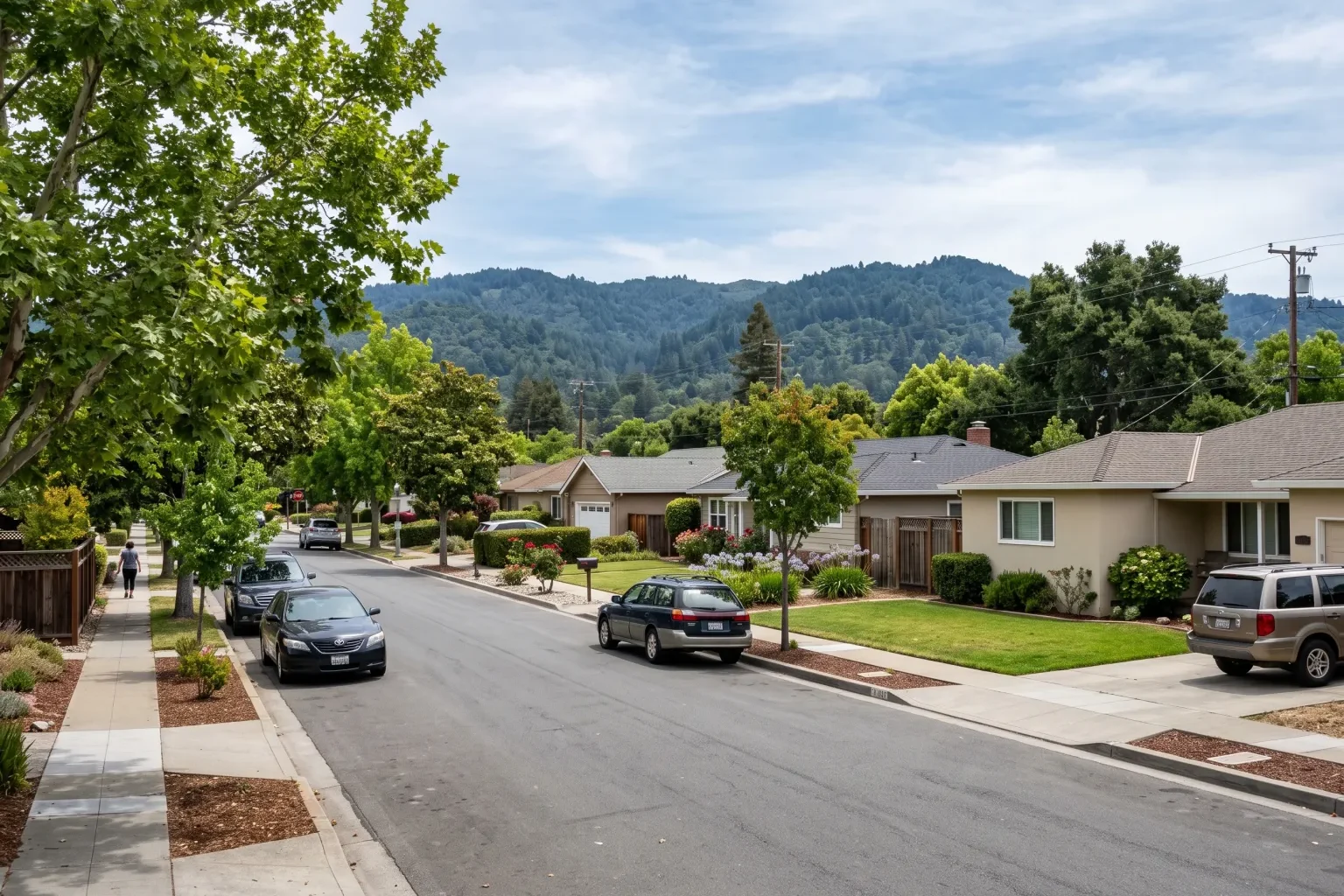
Plenty of houses in Campbell were built for a time when an open window and a ceiling fan got most families through August. That works until a string of hot afternoons pushes indoor temperatures past the point where anyone sleeps well. ClearSky Heating & Cooling installs central air conditioning and ducted cooling systems for homes across the 95008 ZIP code, about eight miles south of our San Jose shop. This page covers how we approach a Campbell installation specifically: what we look at in the attic and crawlspace, how we size equipment for the valley floor between San Jose and the Los Gatos foothills, and the decision many owners now face between a straight air conditioner and a heat pump that also handles winter heat.
Why Campbell homes need a load calculation, not a guess
Campbell sits in the southern half of the Santa Clara Valley, and that part of the valley runs warmer in summer than neighborhoods closer to the Bay. Dry heat builds through the afternoon and often lingers into the evening, especially in single-story ranch houses with west-facing living rooms. At the same time, nights cool off and winters stay mild and damp, so an oversized unit spends most of its life short-cycling instead of running steady.
Instead of matching the tonnage printed on an old condenser, we measure. A Manual J style load calculation accounts for square footage, insulation depth, window area and orientation, ceiling height, shading from mature street trees, and how many people live in the house. A properly sized system removes heat evenly, runs longer and quieter cycles, and avoids the cold-blast, warm-corner pattern that comes from too much capacity.
Ducts first: what we check before choosing equipment
A new outdoor unit cannot fix air that never reaches the bedrooms. Many older Campbell homes have duct runs that were installed for a furnace alone, with small returns, crushed flex sections, or joints that have pulled apart over decades of attic heat. Some have no ducts at all in an addition or converted garage.
During the site visit we inspect the existing distribution system and tell you plainly what we find. Sometimes the ducts only need sealing and a larger return. Sometimes a few runs should be replaced. In homes without usable ductwork, a ductless mini-split can cool the main living areas without opening walls.
- Static pressure readings to see whether the blower can move enough air
- Visual check of supply and return runs for kinks, gaps and missing insulation
- Register count and placement compared with each room's cooling load
- Electrical panel capacity and the route for a new condenser circuit
- Condensate drain path and a level, accessible spot for the outdoor unit
Straight AC or a heat pump? The choice is different now
If your furnace is aging, it is worth thinking about the whole system rather than cooling alone. Under Bay Area Air District Rule 9-4, natural gas furnaces manufactured from 2029 onward must meet a zero-NOx standard. In practice, that steers homeowners toward heat pumps when a furnace is replaced after that point. The rule does not force anyone to tear out working equipment; it applies only when a furnace fails or is replaced.
A heat pump cools exactly like an air conditioner in summer and reverses to heat the house in winter. With Campbell's mild winters, that can be a practical fit. If your furnace still has good years left, a conventional AC paired with the existing furnace is a reasonable choice too. We lay out both paths and let you decide.
One note on incentives: the federal 25C tax credit for heat pumps applied only to systems placed in service before December 31, 2025, so it does not cover new installations. BayREN and your local clean energy provider may offer current programs. Amounts change by funding cycle, so we confirm what is available before it goes into any quote.
How an installation day in Campbell usually runs
Most replacement installs in an existing duct system finish within a day or two. We protect floors along the work path, recover refrigerant from the old system, and remove the old indoor coil and outdoor unit. The new condenser goes on a level pad with proper clearance from fences and side-yard walls, which matters on the narrow lots common in parts of Campbell.
Inside, we set the evaporator coil, connect new or flushed refrigerant lines, pull a vacuum to remove moisture, and charge the system to the manufacturer's specification. Then we test airflow at the registers, confirm temperature drop across the coil, set up the thermostat, and walk you through filter changes and basic care. Permit paperwork with the City of Campbell is handled as part of the job.
Serving Campbell and the neighboring west valley
Our crews travel south from San Jose into Campbell regularly, and the same team covers Los Gatos, Monte Sereno, Saratoga, Cupertino and Santa Clara. Homes in the foothill communities tend to see bigger swings between day and night, while Santa Clara sits a little closer to the Bay's cooling influence. We factor those differences into every proposal so the system fits the house and the location it actually sits in.
More services in Campbell
- AC Repair in Campbell
- Heating Repair in Campbell
- Heat Pump Installation in Campbell
- Furnace Repair in Campbell