
The short answer
Most furnace breakdowns come from a handful of parts: igniters, flame sensors, pressure switches, blower motors and control boards. We diagnose the real fault, check safety items like the heat exchanger and venting, and explain your repair or replacement options before starting any work.
Cold snaps in the Santa Clara Valley are usually short, but a furnace that refuses to light on a damp January morning still makes the house miserable fast. ClearSky Heating & Cooling repairs gas furnaces in San Jose and neighboring communities, from the common no-heat calls to the odd noises and smells that make homeowners nervous. Many furnaces here sit idle for most of the year and then get switched on all at once when the first chilly night arrives, which is exactly when dusty burners, stuck sensors and tired blower motors show up. Our technicians focus on finding the actual cause rather than swapping parts until something works. Read on for the symptoms that call for a repair visit, the components we test, how we help you weigh one more fix against replacement, what affects the repair bill, and what to expect once a technician arrives.
Symptoms that mean it is time to call
Some furnace problems are obvious, like a completely cold house. Others are quieter and easy to ignore until they become a bigger repair. These are the ones we hear about most:
- The thermostat calls for heat, the inducer fan hums, but the burners never light.
- Burners light briefly and then shut off after a few seconds, over and over.
- Air from the registers is lukewarm or cool even though the furnace is running.
- Screeching, grinding, booming or rattling sounds when the system starts.
- A burning dust smell that lingers well beyond the first run of the season.
- Water pooling near a high-efficiency furnace, which often points to a clogged condensate line or trap.
- Blinking status lights on the control board inside the furnace cabinet.
- The smell of gas or a carbon monoxide alarm. Leave the house immediately and contact the gas utility or emergency services before calling us.
Inside a ClearSky diagnostic
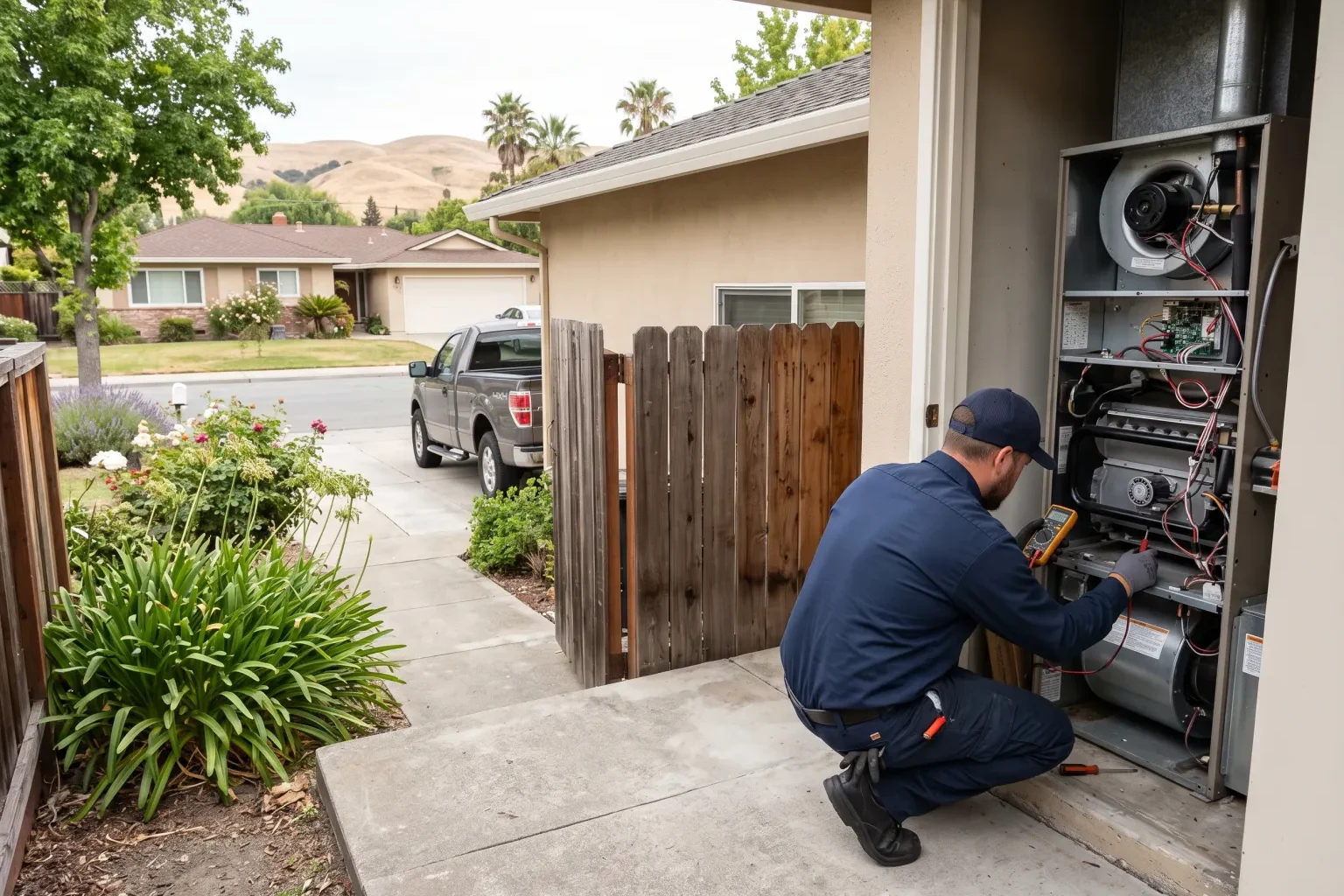
A good diagnosis follows the furnace's own sequence of operation. When the thermostat asks for heat, the control board starts the inducer fan, confirms airflow through the pressure switch, energizes the hot surface igniter, opens the gas valve, proves flame through the flame sensor and finally brings on the blower. Our technician watches each step and measures voltage, resistance, gas pressure and temperatures to see exactly where the sequence breaks.
Along the way, we look at the parts that wear out most often in South Bay homes: flame sensors coated with residue, cracked igniters, pressure switch hoses that have stiffened or filled with water, weak capacitors on the blower motor, and filters so packed with dust that the high-limit switch keeps tripping. We also read any fault codes stored on the board.
Safety checks are part of every visit. We inspect the heat exchanger for visible cracks, look at the flue for disconnection or blockage, check for gas leaks at the valve and fittings, and test for carbon monoxide near the appliance.
One more repair or a new system?
Most furnace repairs are worth doing. A flame sensor cleaning, a new igniter or a replacement inducer motor can put a sound furnace back in service for years. We lean toward repair when the cabinet and heat exchanger are in good shape, the unit is sized properly for the house and parts are available.
The math changes when the heat exchanger is cracked, when the furnace needs a major component such as a gas valve and control board in the same season, or when it has a long history of breakdowns. In that conversation, it helps to know that Bay Area Air District appliance rules do not force anyone to replace working equipment. They come into play only when a furnace fails or is replaced, and gas furnaces manufactured from 2029 must meet a zero-NOx standard that in practice points homeowners toward heat pumps. We lay out both paths clearly so you can choose without pressure.
What affects the price of a repair
We explain the diagnosis and the cost of the fix before doing the work, so nothing on the invoice comes as a surprise. The main variables include the specific part that failed and whether it is a universal component or one made only for your furnace brand, how easy the unit is to reach in an attic, closet, garage or crawlspace, and whether the visit happens during normal hours or needs a rush response.
Secondary repairs can also play a role. A failed blower motor may have been caused by a dirty filter and restricted ducts, and a tripping limit switch can point to a return that is simply too small. When we find a root cause like that, we tell you so the same part does not fail again next winter.
What happens when our technician arrives
When you call, we ask a few questions about the symptoms, the furnace location and any error lights, which helps the technician bring likely parts. On arrival, they listen to your description, run the furnace through a full cycle and begin testing.
Once the problem is clear, you get a plain explanation of what failed and why, along with the repair option and, when it is relevant, the replacement alternative. With your approval, we complete the repair, run the system through several heating cycles to confirm stable operation, replace or recommend a new filter, and go over anything else we noticed, such as a vent connection to keep an eye on.
Furnace Repair by city
- Furnace Repair in Santa Clara
- Furnace Repair in Milpitas
- Furnace Repair in Sunnyvale
- Furnace Repair in Campbell
- Furnace Repair in Fremont
- Furnace Repair in Cupertino
- Furnace Repair in Mountain View
- Furnace Repair in Los Altos
- Furnace Repair in Saratoga
- Furnace Repair in Newark
- Furnace Repair in Monte Sereno
- Furnace Repair in Los Gatos