
The short answer
A new AC installation starts with a load calculation and a duct assessment, then a choice between a central air conditioner, a heat pump or a ductless system. ClearSky Heating & Cooling explains each option and what drives the cost so you can decide with confidence.
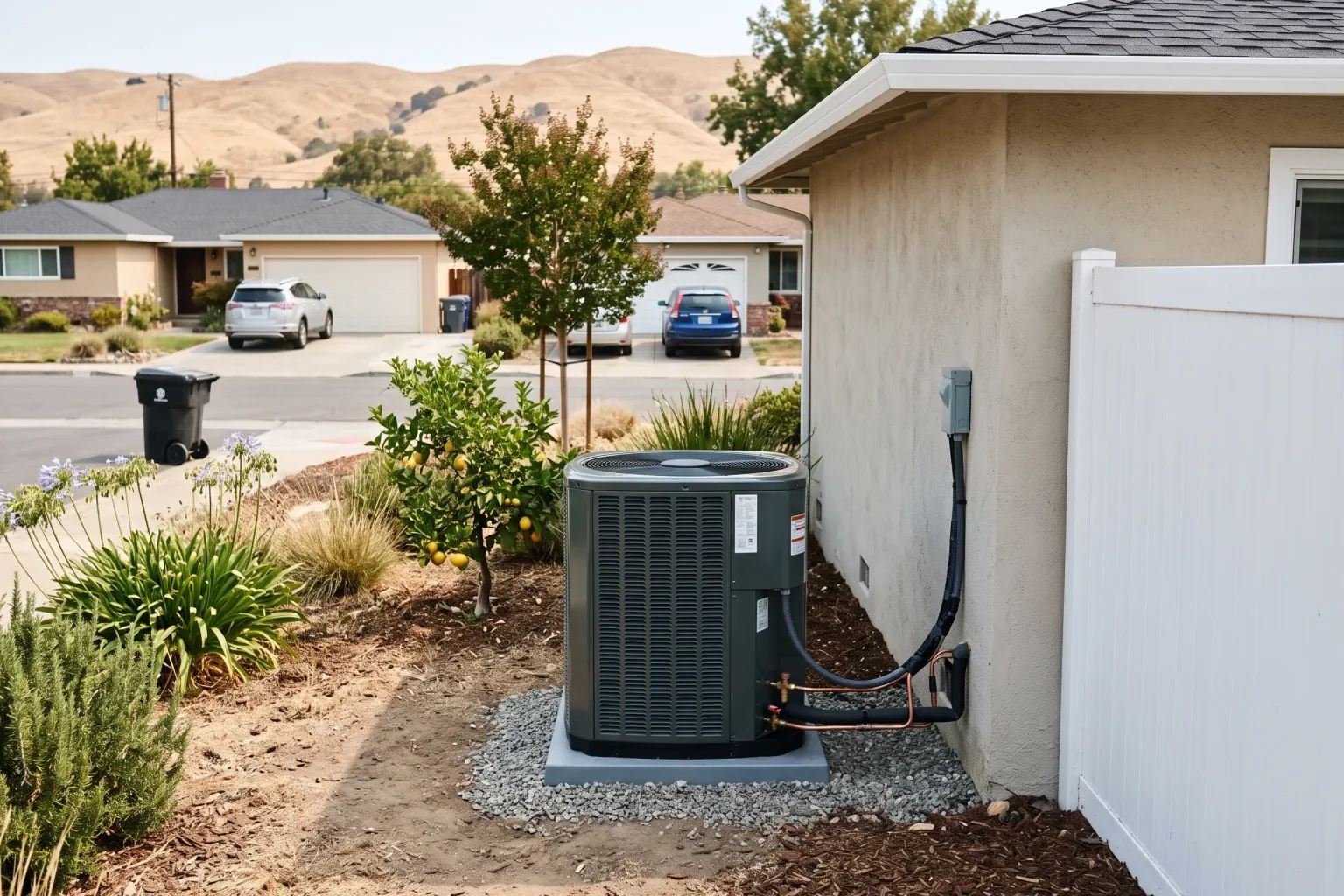
Putting in a new cooling system is one of the larger decisions a homeowner makes about a house, and it deserves more than a quick swap of the old box for a new one. ClearSky Heating & Cooling installs central air conditioners, heat pumps and ductless mini-splits in San Jose and nearby South Bay cities. We size equipment for the house it serves, check the ducts it will rely on, and explain the choices before anything is ordered. Summers in the Santa Clara Valley are dry, and inland neighborhoods heat up more than those near the Bay, so the right system for a home in one part of the valley may be wrong for a home in another.
Signals that a new system may be due
Not every struggling air conditioner needs replacing, and we will say so when a repair is the sensible answer. Still, certain patterns suggest the existing system is near the end of its useful life or was never a good fit for the house:
- A compressor or coil failure on an aging unit
- Repeated repair calls over the past few seasons
- Equipment that uses a refrigerant no longer manufactured
- Rooms that stay warm no matter how long the system runs
- A home that has never had cooling and now needs it after a remodel or addition
- A gas furnace nearing replacement, making a combined heat pump upgrade worth considering
What we evaluate before recommending equipment
Sizing by rule of thumb or by matching the old unit often repeats past mistakes. A system that is too large cools in short bursts, leaves humidity behind and wears its parts faster. One that is too small runs nonstop during heat spells. We base the recommendation on the house itself: square footage, insulation, window area and orientation, ceiling height, and how much afternoon sun the rooms take.
The ducts get equal attention. Many older South Bay homes have attic duct systems with crushed sections, failing tape or undersized returns. A new air conditioner connected to leaky ducts will not deliver the comfort it is rated for. We measure static pressure and inspect accessible runs, then tell you whether the existing ducts can carry the new system, need sealing or repair, or should be partly replaced.
Electrical capacity, the location of the outdoor unit, refrigerant line routing and condensate drainage are also checked, since any of them can change the installation plan.
Choosing between system types
Most homeowners end up weighing three directions. A central air conditioner paired with an existing furnace is the familiar setup, adding cooling while the gas furnace keeps handling heat. A heat pump replaces both functions with one outdoor unit that cools in summer and heats in winter, which suits the valley's mild, damp winters well. A ductless mini-split serves homes without ducts, additions or individual rooms that the main system cannot reach.
Bay Area Air District rules come into the conversation here. Gas furnaces manufactured from 2029 must meet a zero-NOx standard, which in practice points future furnace replacements toward heat pumps. The district does not require replacing working equipment, so if your furnace is healthy, you can keep it. Some homeowners decide to add a heat pump now to avoid a second project later; others prefer to wait. We explain both paths without pressure.
Repairing the old unit versus starting fresh
Some homeowners come to us expecting a replacement and leave with a repair, and others the reverse. The deciding factors are the condition of the major components, how the existing system has performed, and what you want from the house going forward. A failed capacitor or fan motor on an otherwise healthy unit is usually worth fixing. A failed compressor, a leaking coil on an older system, or equipment that depends on a phased-out refrigerant changes the math, because the repair can approach the scale of a new installation while leaving the rest of the aging system in place.
Comfort goals count too. If the house has always had hot rooms, noisy operation or high humidity, repairing the same equipment brings back the same experience. A properly sized system with corrected ductwork can address those long-standing complaints in a way that patching never will. We describe what each path delivers so the decision reflects both the immediate failure and the way you want the home to feel during the hottest weeks of a valley summer.
What affects the cost of an installation
Installation cost depends on the house and the equipment chosen, so we prepare a specific proposal after the assessment. The main variables include:
- System type and capacity, from a single mini-split head to a whole-house heat pump
- Efficiency level and features such as variable-speed compressors
- The amount of duct sealing, repair or replacement needed
- Electrical work, such as a panel upgrade or a new circuit
- Access to the attic, crawlspace or the outdoor unit location
- Permits required by the city
The installation process from first visit to final check
It starts with an assessment visit where we measure, inspect and listen to what you want from the system, whether that is quieter operation, more even temperatures or lower bills. You then receive a written proposal describing the equipment, the duct work, and the scope of the job. If incentive programs through BayREN or your local clean energy provider apply, we confirm the current offer before including it. The federal 25C credit is not available for heat pumps placed in service after 2025, so we will not factor it in.
On installation day, the crew protects floors and work areas, removes the old equipment, sets the new units, connects refrigerant lines and wiring, and addresses any duct work in the plan. After startup, the technician checks refrigerant charge, airflow, temperature split and thermostat operation, then walks you through using the controls and changing filters. Permit inspections follow the city's schedule, and we coordinate them.
AC Installation by city
- AC Installation in Santa Clara
- AC Installation in Milpitas
- AC Installation in Sunnyvale
- AC Installation in Campbell
- AC Installation in Fremont
- AC Installation in Cupertino
- AC Installation in Mountain View
- AC Installation in Los Altos
- AC Installation in Saratoga
- AC Installation in Newark
- AC Installation in Monte Sereno
- AC Installation in Los Gatos