
The short answer
Duct cleaning makes sense when there is visible buildup, debris after construction, pest activity or mold growth inside the ducts. ClearSky Heating & Cooling inspects first, then recommends cleaning, repair, sealing or replacement based on what the ducts actually show.
Ductwork is the part of a heating and cooling system most people never see, tucked into attics, crawlspaces and wall cavities. It also shapes how clean the indoor air feels and how evenly rooms heat and cool. ClearSky Heating & Cooling cleans and inspects residential ducts in San Jose and nearby cities. Before any cleaning, we look inside the system to see whether it actually needs it, and whether the bigger issue is dirt or damage. The long dry season in the Santa Clara Valley sends fine dust into homes, and many houses here have older duct systems with gaps, sagging runs or deteriorated insulation, so both concerns come up often.
When a duct cleaning is worth it
Ducts collect some dust over time, and a light film is normal. Cleaning becomes a sensible step when something more than everyday dust is involved. Homeowners usually notice one or more of these first:
- Gray buildup visible on register covers or just inside the supply openings
- Puffs of dust when the blower starts
- A remodel, drywall work or flooring project that sent fine debris through the house
- Droppings, nesting material or odors suggesting rodents or insects in the system
- A musty smell when the heat or air conditioning first runs
- Moisture or visible growth on the ducts or the indoor coil
- Allergy or dust complaints that persist even with frequent filter changes
What we inspect inside your duct system
The visit starts at the equipment. The filter, blower compartment and indoor coil often reveal how much debris is moving through the system, and a dirty coil or blower can cause the same symptoms people blame on ducts. From there, the technician opens several registers and the return grille, using a camera where needed to see deeper into the runs.
Attic and crawlspace runs get a visual check where they can be reached safely. We look for disconnected or loose joints, crushed or kinked flex duct, torn insulation jackets, failing tape and gaps where boots meet the ceiling or floor. Each of those lets unfiltered air from the attic or crawlspace into the system, which can pull dust and insulation fibers back into the living space even after a cleaning. Static pressure readings help show whether airflow is restricted.
You then see what we found, often with photos, and hear which items matter and which can wait.
Cleaning, repairing or replacing ducts
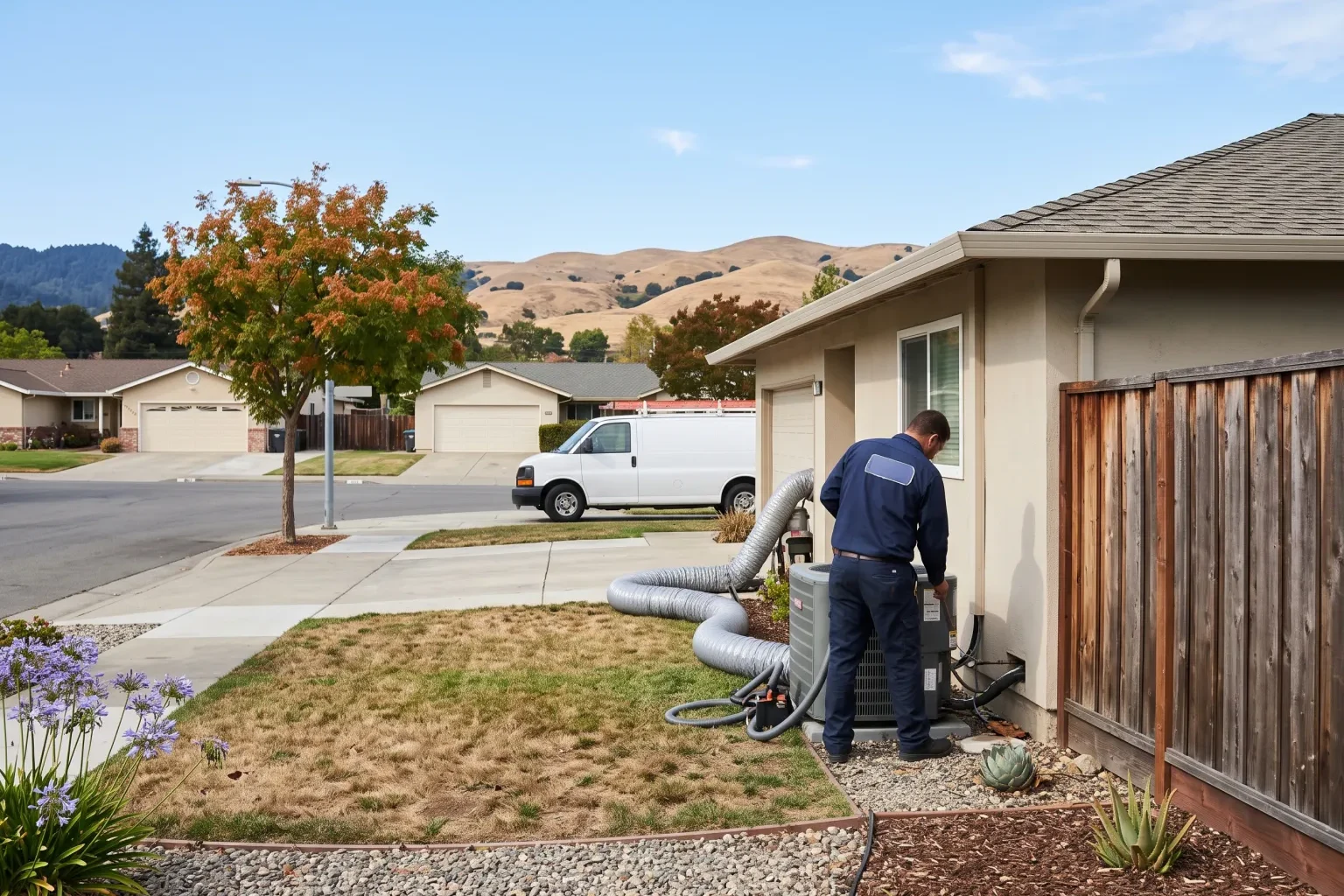
If the ducts are structurally sound and simply dirty, cleaning is the right answer. The system is placed under negative pressure, and debris is loosened from the duct walls with brushes or air tools so it can be drawn out rather than blown back into the house. The blower and coil are addressed as part of the work when they need it, since a clean duct feeding from a dirty blower does little good.
When the inspection shows damage, cleaning alone will not solve the problem. Separated joints and torn sections can often be repaired and sealed. Flex duct that has collapsed, been chewed by pests or lost its insulation is usually better replaced than patched. In some older homes, much of the duct system has reached the point where replacing large sections improves comfort and air quality more than any cleaning could.
If you are planning a new heat pump or air conditioner, it is a good moment to evaluate the ducts, since new equipment depends on them to perform. Bay Area Air District rules will require gas furnaces made from 2029 to meet a zero-NOx standard, which points many future replacements toward heat pumps. Those rules do not require replacing working equipment, but if a change is on your horizon, sorting out the ducts first is often sensible.
Keeping ducts cleaner between visits
Cleaning resets the system, but daily habits decide how quickly dust returns. The filter is the first line of defense. A filter that fits its slot snugly, without gaps around the edges, catches far more than a loose one, and checking it monthly during heavy heating or cooling use keeps airflow steady. If the house has pets, a nearby construction site or windows open often during the dry months, the filter will load faster.
Sealed ducts stay cleaner than leaky ones. When return ducts in the attic or crawlspace have gaps, they pull in insulation fibers and dust from those spaces every time the blower runs. Sealing those leaks reduces the dust load and also helps the system heat and cool more evenly. Keeping registers unblocked by furniture and rugs, and vacuuming register covers when you clean the room, helps as well. After major remodeling, running the system with a fresh filter and replacing it again once the work wraps up keeps construction dust from settling deep in the runs.
Factors that change the cost of duct work
Each house is different, so we quote after the inspection. The main things that move the cost are:
- The number of supply and return registers in the home
- Total length of the duct system and how many branches it has
- Access to attic or crawlspace runs, including height and insulation depth
- Duct material, since rigid metal and flex duct are handled differently
- Whether pest debris or mold requires extra cleaning steps
- The amount of sealing, repair or section replacement needed
- Cleaning of the blower, coil or other equipment components
How a duct cleaning appointment works
When you schedule, we ask about the home's size, where the equipment sits, and what prompted the call. On arrival, the technician protects floors near the registers and the equipment, then performs the inspection described above and explains the findings before starting any work.
With your approval, cleaning proceeds room by room, with registers covered and the system kept under negative pressure. Repairs or sealing come next if they are part of the plan. Afterward, the technician runs the system, checks airflow at the registers, installs a fresh filter and goes over what was done, including any duct sections worth replacing later.