
The short answer
Regular HVAC maintenance keeps furnaces, air conditioners and heat pumps running efficiently and safely through the valley's hot summers and damp winters. A ClearSky tune-up cleans and tests key components, measures performance and flags small problems early, ideally once in spring and once in fall.
Heating and cooling equipment in the South Bay has an unusual workload. Air conditioners can sit nearly idle through a cool spring and then run for hours a day once inland heat builds in late summer, while furnaces and heat pumps wake up for a damp winter after months of collecting dust. Those sudden swings are hard on motors, capacitors, igniters and coils, and they explain why so many breakdowns happen on the first truly hot or cold day of the year. ClearSky Heating & Cooling performs scheduled maintenance on furnaces, central air conditioners, heat pumps and ductless systems for homeowners in San Jose and surrounding cities. A tune-up is not a quick filter swap; it is a methodical inspection that catches small issues before they turn into no-heat or no-cool calls. Below, you can see when maintenance is due, the checklist our technicians follow, how findings turn into repair or replacement advice, what affects the cost of a visit and how the appointment runs.
Signs your system is overdue for service
The best time to schedule maintenance is before you notice anything wrong. Spring visits prepare the cooling side for the hot months, and fall visits get the heating side ready before the first cold, wet stretch. If you are not sure when the system was last serviced, these clues suggest it has been too long:
- The filter is gray and packed with dust, or you cannot remember when it was last changed.
- Energy bills are creeping up without a change in how you use the system.
- Airflow from the registers feels weaker than it used to.
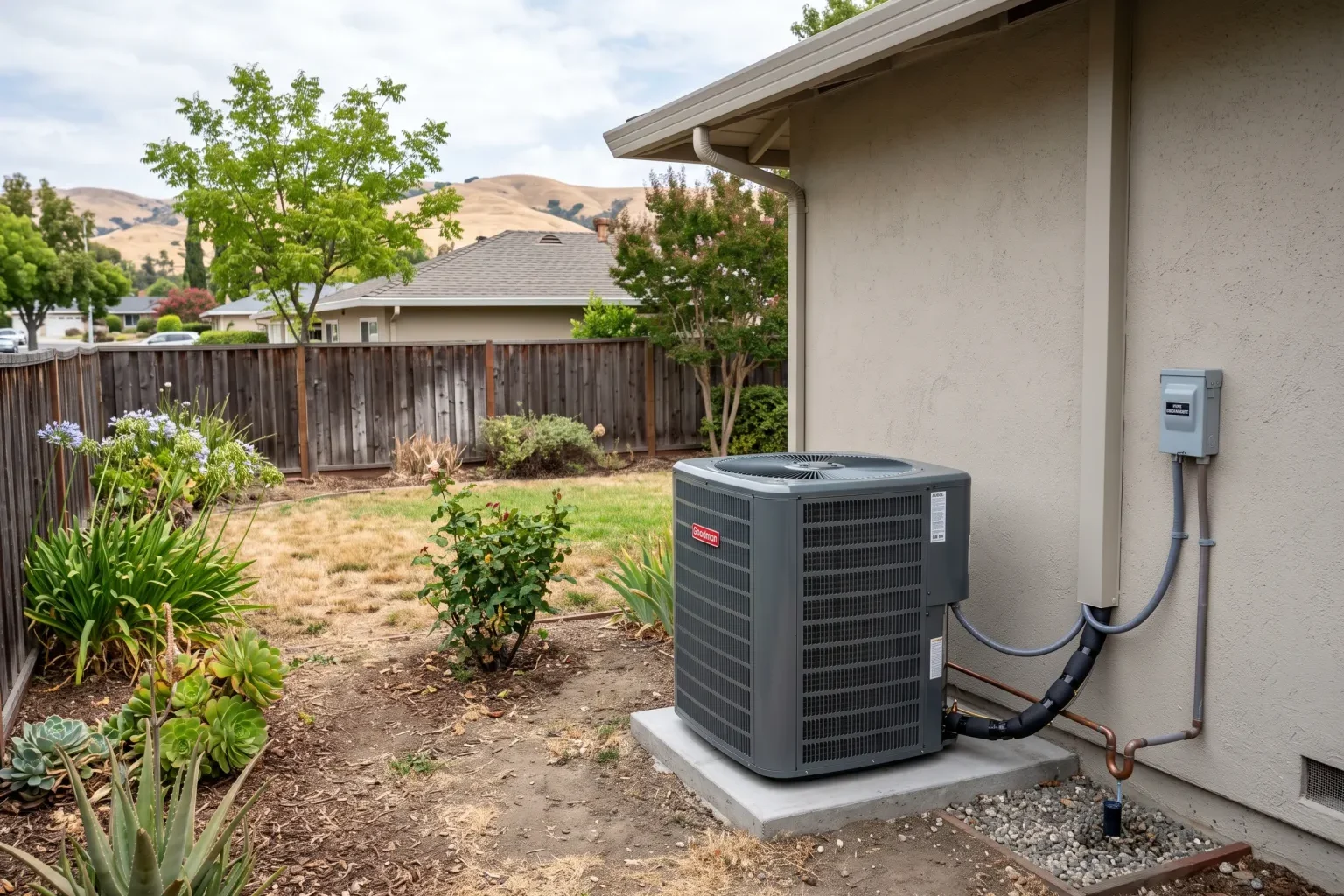
- The outdoor unit is surrounded by leaves, weeds or stored items, or its fins are bent and matted.
- You hear new clicks, hums or squeals at startup.
- The system takes noticeably longer to reach the set temperature.
- There is water around the indoor unit or a musty smell when the fan starts.
The tune-up checklist
Every visit follows a written list adapted to the equipment you have. On the cooling and heat pump side, we clean the outdoor condenser coil, straighten fins where needed, check the contactor and capacitor, measure refrigerant pressures and temperature split, verify the outdoor fan motor, flush the condensate drain and inspect the indoor coil and drain pan for buildup or rust. Heat pumps also get a test of the reversing valve and defrost cycle.
On gas furnaces, we inspect and clean the burners, test the igniter and flame sensor, check gas pressure, confirm the inducer and pressure switch are working, look at the flue connection and examine what is visible of the heat exchanger. We test for carbon monoxide near the appliance and verify the high-limit and rollout safety switches.
For every system, we check the blower wheel and motor, tighten electrical connections, measure voltage and amperage on motors, test thermostat operation and replace or advise on the air filter. Ductless systems get their indoor heads, filters and blower wheels cleaned as well. You receive notes on what we tested, the readings and anything that needs attention.
When a tune-up uncovers a bigger issue
Most maintenance visits end with a clean, well-tested system and nothing more to do. When we do find a problem, we sort it by urgency. A swollen capacitor or a cracked igniter is usually a quick repair that prevents a breakdown in the middle of a heat wave. A slow refrigerant leak or a corroded drain pan may be worth scheduling soon. A cracked heat exchanger is a safety issue that we explain right away.
If the equipment is old and the findings suggest it is nearing the end of its life, we tell you honestly and give you time to plan. Bay Area Air District rules do not require replacing working equipment, so a well-maintained furnace can keep running. When a gas furnace is eventually replaced after the 2029 zero-NOx standard takes effect for newly manufactured units, heat pumps become the practical alternative, and we are happy to talk through that timeline during a routine visit.
What affects the cost of maintenance
The price of a visit depends mostly on how many systems you have and what kind they are. A single furnace takes less time than a furnace and air conditioner pair, and a multi-zone ductless system with several indoor heads takes longer still. Access plays a role, especially for attic and crawlspace equipment, as does the condition of the system: a coil that has gone years without cleaning needs more work than one serviced every season.
Parts and repairs found during the visit are quoted separately before any work is done, so the maintenance itself stays predictable. Some homeowners prefer to book a spring and fall visit together, which keeps the schedule simple and makes sure both heating and cooling are covered each year.
How the appointment works
We schedule a time window that suits you and confirm the equipment you have so the technician brings the right filter sizes and cleaning supplies. On arrival, they ask whether you have noticed any changes in how the system runs, then work through the checklist indoors and outdoors.
A standard tune-up for one system usually takes about an hour or so, longer for multiple systems or equipment in tight spaces. At the end, the technician reviews the results with you, shows any worn parts, answers questions about thermostat settings and filter changes, and notes when the next visit should be scheduled.
Simple habits between visits
A few homeowner habits make a real difference in the valley's dusty, dry summers. Check the filter monthly during heavy use and replace it when it looks dirty. Keep plants, fencing and storage at least a couple of feet from the outdoor unit. Keep supply and return registers clear of furniture and rugs. And if a breaker trips or the system starts making a new noise, call before the problem spreads to other parts.