
The short answer
A new furnace makes sense when the old one is unsafe, failing repeatedly or badly mismatched to the house. We measure heat loss, inspect ducts and venting, compare gas and heat pump options under current Bay Area Air District rules, and give a written quote before scheduling.
Replacing a furnace is one of those decisions most people make only a couple of times as homeowners, so it helps to understand the process before a technician is standing in your hallway closet. ClearSky Heating & Cooling installs new gas furnaces and helps homeowners compare them with electric heat pump alternatives across San Jose and nearby South Bay cities. Our approach is practical: figure out whether replacement is truly needed, match the new equipment to the house rather than to the old nameplate, and handle the venting, gas, electrical and permit details so the system runs safely for a long time. This page walks through the warning signs that point toward a new furnace, the measurements and inspections we make, when a repair is the smarter call, the factors that move the price of a project, and how a typical installation is scheduled and completed.
Warning signs your furnace is near the end
Furnaces seldom quit without hints. In the South Bay, where heating season is mild and damp rather than harsh, an aging unit can limp along for years, which makes the slow decline easy to miss. Pay attention if you notice any of these patterns:
- Repair visits are becoming a regular part of every winter, and each one involves a different part.
- A technician has found cracks, heavy rust or soot around the heat exchanger or burner area.
- Some rooms never warm up while the hallway near the return feels fine, even after duct sealing.
- The burner flame looks lazy and yellow instead of crisp and blue.
- The blower runs loudly, rattles, or cycles on and off every few minutes.
- Gas bills keep rising even though the thermostat settings and weather have not changed.
- A carbon monoxide alarm has sounded, or you notice headaches that ease when you leave the house. In that case, shut the system off, get outside and call for emergency help first.
Our pre-installation assessment
Plenty of older furnaces in the valley were oversized when they went in, and replacing them with the same capacity repeats the mistake. We start with a heat loss calculation based on square footage, insulation, window area, air leakage and orientation, so the new unit is sized to what your house actually loses on a cold night.
From there we inspect the supply and return ducts for disconnected joints, crushed flex runs and leaks into the attic or crawlspace, since a new furnace connected to leaky ducts will never deliver its rated comfort. We check the flue or vent path, combustion air supply, gas line size and shutoff, condensate drainage for high-efficiency models, the electrical circuit and the thermostat wiring. If the furnace shares a closet with a water heater, we confirm clearances for both.
Finally, we ask how you use the house. A family that works from home has different needs from a couple who are gone all day, and that shapes recommendations about variable-speed blowers, two-stage burners and smart controls.
Should you repair or install new?
We are not in a hurry to sell equipment. A furnace with a failed igniter, flame sensor, inducer motor or control board can usually be repaired, and if the heat exchanger is sound and the unit is sized correctly, repairing it is often the sensible move. Bay Area Air District appliance rules do not require anyone to replace working equipment; they apply only when an existing furnace fails or is replaced.
Replacement deserves a serious look when the heat exchanger is compromised, when parts are no longer available, or when the cost of the next repair starts to approach a meaningful share of a new system. It is also worth planning ahead. Under Air District Rule 9-4, natural gas furnaces manufactured from 2029 must meet a zero-NOx emission standard, which in practice points homeowners toward heat pumps when a furnace is replaced after that date. If your furnace is still healthy, there is no need to act early, but knowing the timeline helps you decide whether a new gas furnace now or a heat pump later fits your plans better.
Factors that drive the installation cost
Every quote we write is based on the walkthrough, not a formula. These are the items that make the biggest difference:
- Furnace type and efficiency, from standard-efficiency models to condensing units that need a new PVC vent and drain.
- Burner and blower technology, such as single-stage versus two-stage or modulating operation and variable-speed fans.
- Location of the unit, whether in a garage, hall closet, attic or crawlspace, and how hard it is to reach.
- Duct repairs, new returns or transitions needed to fit the new cabinet.
- Venting changes, including relining a chimney or rerouting a flue.
- Gas line, electrical or thermostat upgrades.
- City permits and the required inspection.
From quote to first heat cycle
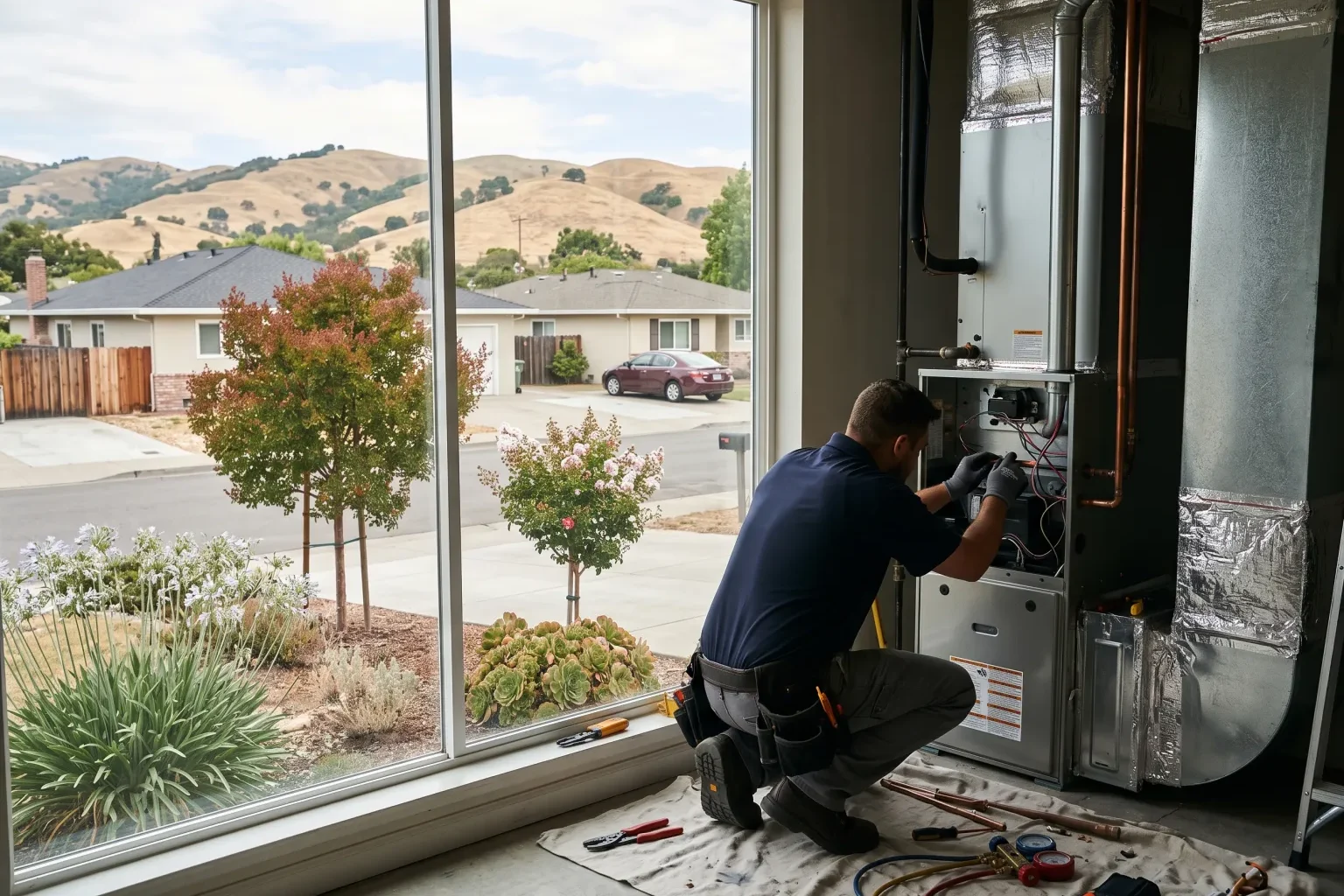
After you choose the equipment, we pull the permit and book a date. On installation day the crew lays down floor protection, shuts off the gas and power, and removes the old furnace for disposal. The new unit is set, leveled and connected to the plenum, return and gas supply, and the vent and condensate lines are routed to code.
Before we leave, we light the furnace and measure gas pressure, temperature rise across the heat exchanger and static pressure in the ducts, and we test combustion and the safety controls. We program the thermostat, show you where the filter goes and how often to change it, and leave the paperwork for the inspection. Most straightforward swaps are finished in a single day, while attic installs or projects with duct changes can stretch longer.